Automatic and robotic transmissions rarely fail without warning. Most major breakdowns are preceded by weeks or months of subtle changes in shift quality, fluid condition, and drivetrain behavior. Recognizing these signals early can mean the difference between a software calibration and a full internal rebuild.
1. Delayed or Harsh Shifts
When a transmission hesitates before engaging drive or reverse, or slams between gears, internal pressure or clutch wear is often the cause. A delay of more than two seconds when selecting a gear warrants a professional scan.
Modern units rely on precise hydraulic pressure and electronic solenoid timing. Even small deviations produce noticeable shift harshness that drivers frequently dismiss as normal aging.
2. Burning or Sweet Odor From Fluid
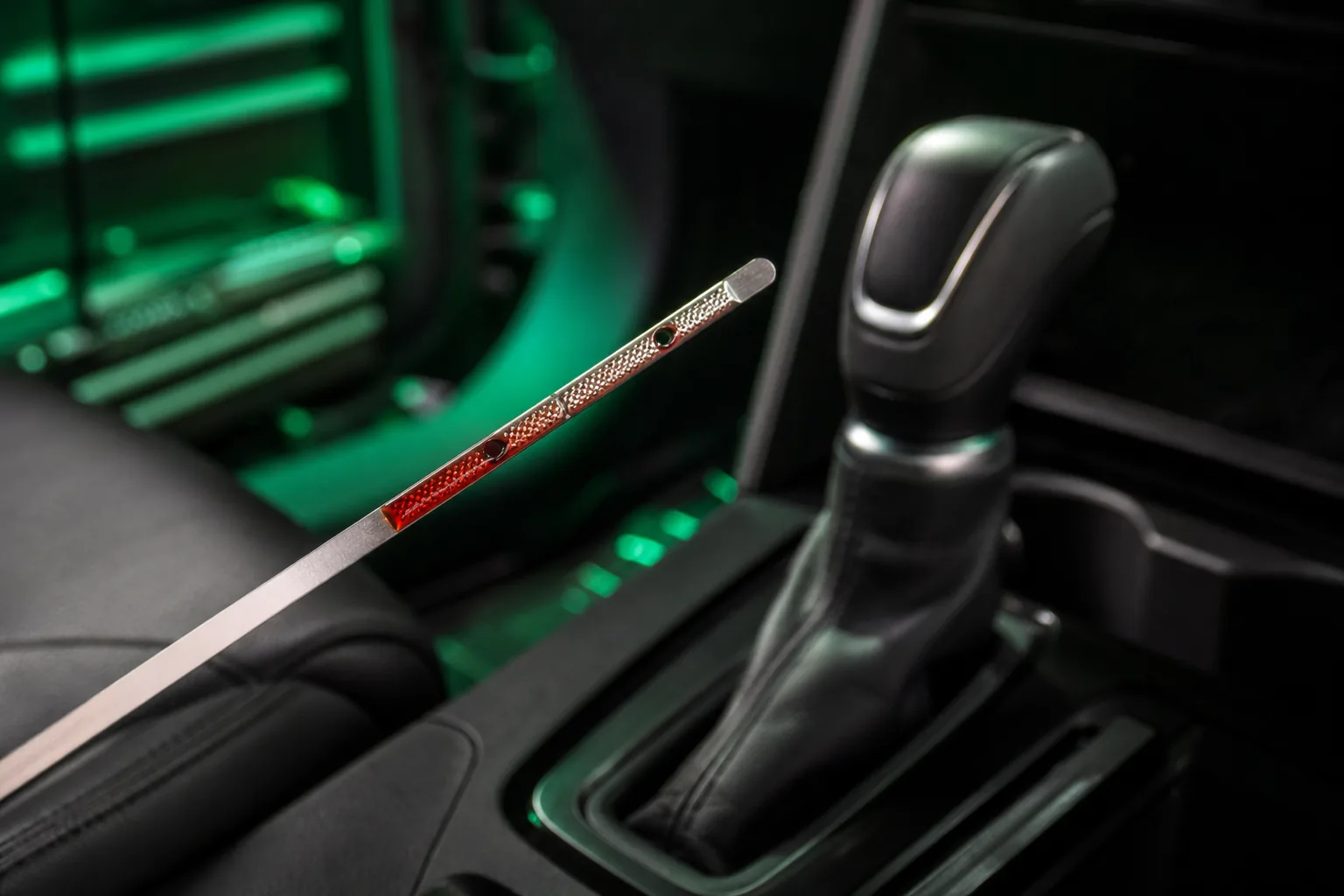
Healthy transmission fluid has a mild petroleum smell. Overheated fluid smells burnt and indicates clutch material breakdown inside the unit. Dark brown or black fluid with a charred odor means the lubricant has lost its protective properties.
Pull the dipstick if your vehicle has one, or inspect the fill port during service. Color alone is not enough — smell and viscosity tell a more complete story.
3. Unexplained Vibrations Under Load
Vibration during acceleration that disappears when coasting often points to a torque converter or input shaft issue. Vibrations at steady highway speed may indicate output shaft or differential coupling problems misidentified as tire balance issues.
4. Slipping Between Gears
Engine RPM rising without corresponding acceleration is classic slip behavior. This occurs when clutches fail to maintain friction under load. Continuing to drive with slip accelerates internal damage exponentially.
Slip may appear only under heavy throttle or when climbing grades — intermittent slip is still a serious warning sign.
5. Warning Lights and Stored Fault Codes
Transmission control modules log pressure faults, solenoid failures, and temperature events before a dashboard light appears. A scan tool reading pending codes can reveal developing problems while the vehicle still drives normally.
6. Fluid Leaks Under the Vehicle
Red or brown stains on your parking surface indicate seal or pan gasket failure. Low fluid level causes pump cavitation and accelerated wear. Even slow seepage eventually drops fluid below the minimum safe operating level.
7. Unusual Noises in Neutral or Park
Whining, clunking, or grinding in park or neutral with the engine running suggests bearing or planetary gear wear. These sounds often disappear once a gear is selected, leading owners to ignore them until failure occurs under load.
When to Schedule a Diagnostic Scan
If you notice two or more of these symptoms, schedule an instrumental diagnostic session. At kinesthesis, we combine fluid analysis, pressure testing, and live data review to determine whether your issue requires a fluid service, solenoid replacement, or deeper internal work — before costs escalate.