Brake Systems
A Complete Brake System Inspection Checklist for Safety-Conscious Drivers
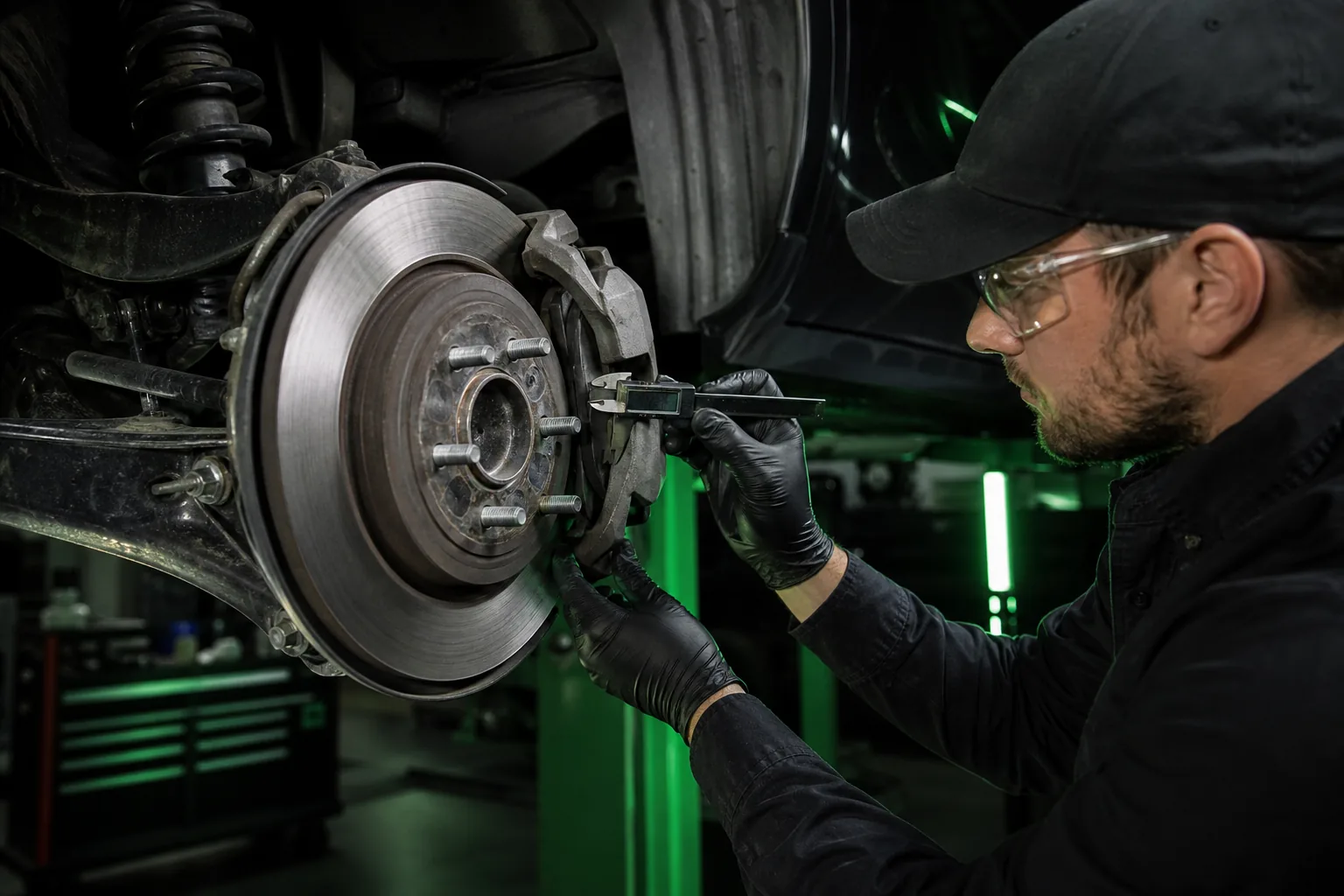
Braking performance depends on four independent subsystems — friction material, rotors, hydraulic lines, and fluid — each wearing at different rates. A thorough inspection evaluates all four rather than replacing pads alone and calling the job complete.
Pad Thickness and Wear Patterns
Minimum pad thickness is typically three millimeters, but we recommend replacement earlier to protect rotors. Uneven wear between inner and outer pads on the same caliper indicates slider pin binding or caliper piston drag.
Edge cracking, glazing, or metal-to-metal contact scoring on the rotor surface means immediate service is required regardless of measured thickness.
Rotor Condition and Runout
Rotors should be measured for thickness against the minimum stamped on the hat. Lateral runout above manufacturer specification produces pedal pulsation and accelerated pad wear. Heat checking and blue discoloration signal overheating events that compromise metallurgical structure.
Resurfacing is viable only when enough material remains above minimum thickness — otherwise replacement is the safe choice.
Brake Lines and Flexible Hoses
Rubber flex lines swell internally before external cracks appear, reducing hydraulic pressure transfer. We inspect for bulging under pedal pressure and check hard lines for corrosion, especially in climates where road salt is used. Any moisture intrusion point is a safety priority.
Fluid Moisture Content and Level
Brake fluid is hygroscopic — it absorbs moisture over time, lowering boiling point and promoting internal corrosion. Test strips or electronic testers measure moisture percentage. Fluid darker than fresh amber suggests contamination or age.
- Replace fluid every two to three years in most climates.
- Never top off with a different DOT rating than specified.
- Low fluid level may indicate pad wear or a leak — investigate before adding fluid.
Caliper and Hardware Inspection
Caliper pistons must retract freely after pad contact. Corroded guide pins cause drag that overheats one side of the rotor. Slide hardware, abutment clips, and anti-rattle shims should be cleaned and lubricated with high-temperature brake grease during every pad service.
Electronic Brake Assist Systems
Modern vehicles integrate ABS, stability control, and autonomous emergency braking. Scan tools verify sensor calibration and fault history. A physical inspection without electronic verification misses a significant portion of the braking ecosystem.
Schedule a Brake Evaluation
If your pedal feels soft, pulsates, or pulls to one side, do not wait for the next scheduled service. kinesthesis performs complete brake evaluations with documented measurements so you understand exactly what requires attention and what can safely remain in service.